The Starting Line is brought to you by AusTriathlon

Ready
Training for Triathlon – Beginner Exercises
Welcome the wonderful sport of triathlon! To get started let’s get you moving and doing some basic exercises which form the foundation for your triathlon training.
General physical activity recommendations suggest a minimum of 30 mins of activity on 5 days a week. This can include walking, jogging, cycling, swimming or any other activity that you enjoy. In addition to general aerobic exercise, it is recommended to complete 2 sessions of resistance training per week targeting all major muscle groups.
Disclaimer: The following information is intended as general guidance only. Before commencing any training, it is strongly recommended that you consult a qualified and accredited coach. All activities should be undertaken in a controlled environment, with appropriate protective equipment and insurance coverage.

Swimming
Begin your swimming journey in a safe, supervised environment, ideally a pool with lifeguards present. Start in the shallow end to acclimate to the water, then gradually increase your swimming distance as your confidence and ability improve. If you are not a confident swimmer, seek professional coaching before attempting any unsupervised sessions.

Cycling
If available, start with a stationary bike to build foundational fitness and confidence. When transitioning to outdoor cycling, use designated bike paths or cycling tracks that are free from vehicular traffic. Always wear appropriate protective gear, including a helmet, and ensure you have suitable insurance coverage. Begin with short, manageable rides and progressively increase your distance over time.

Running
Start with a walk-run approach to ease into running. For example, alternate between 1 to 2 minutes of running and 1 to 2 minutes of walking, beginning with a total duration of around 10 minutes. Gradually increase the duration and intensity as your fitness improves. Always be mindful of safety, especially when running near roads or in low-visibility conditions.
To support recovery and adaptation, alternate between swimming, cycling, and running days.
This approach helps prevent overtraining and allows your body to adjust to the demands of each discipline.
Discover the exercises below. To download the PDF version, click here
Strength Training
The below exercises are an introduction to resistance training that incorporates fundamental movement patterns and includes some progressive variations for each exercise.
Begin with 2 sessions per week, completing 2 sets of 10-12 reps, working your way up to 3 sets of 10-12 as you are feeling more comfortable.
Strength training is important for triathletes to improve musculoskeletal strength, muscular endurance and posture. A stronger athlete is more powerful, efficient and injury resilient.
Strength training can improve your performance in all 3 disciplines:
- Swimming: better posture and upper body strength in the water.
- Cycling: greater leg strength and power output on the bike.
- Running: improved running economy and injury prevention.
1. Glute Bridge → Single-Leg Glute Bridge
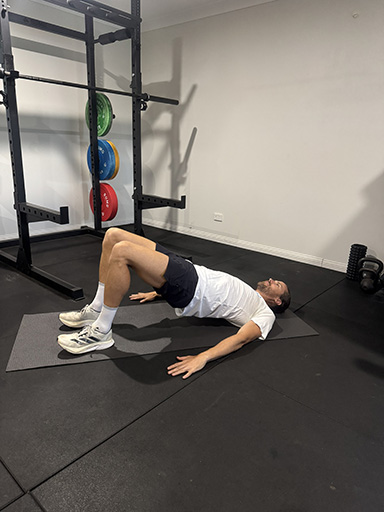
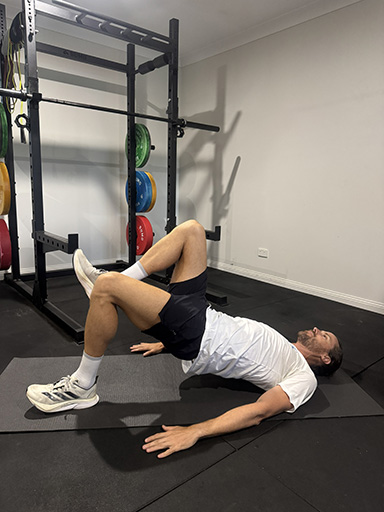
- Drive through heels to raise hips high, squeeze glutes at the top.
- Keep core tight to avoid arching lower back.
- Single leg, keep hips level and avoid dropping one side.
2. Air Squat → Goblet Squat
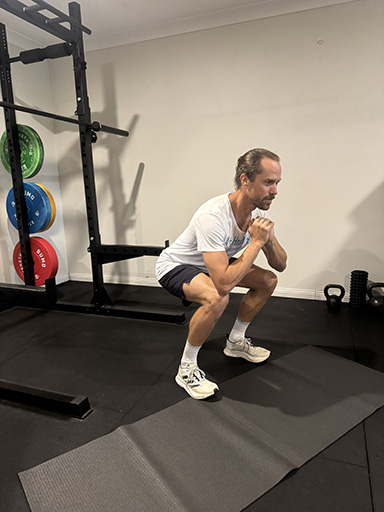
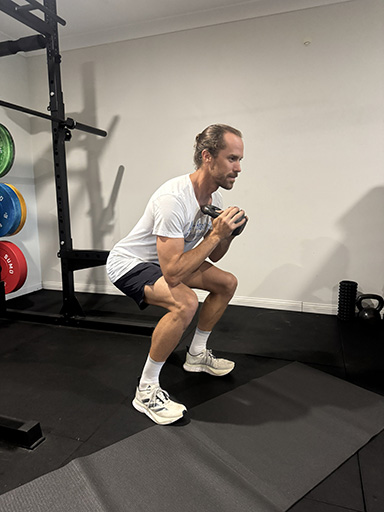
- Feet shoulder-width apart, chest tall, knees track over toes.
- Sit hips back and down as if you were sitting on a chair, feet stay grounded.
- If using weight, hold weight close to chest, engage core to keep upright torso.
3. Forward Lunge → Lateral Lunge
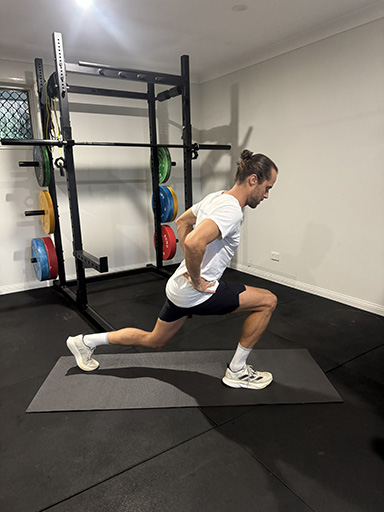
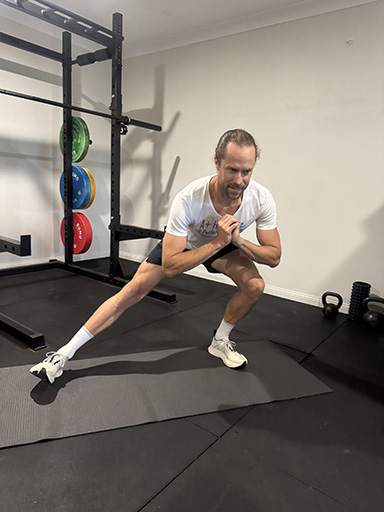
- Front knee over ankle, back knee lowers under control.
- Torso upright, push through front foot to stand.
- Lateral lunge- shift weight side-to-side, keep one leg straight and foot flat.
4. Calf Raise → Single-Leg Calf Raise
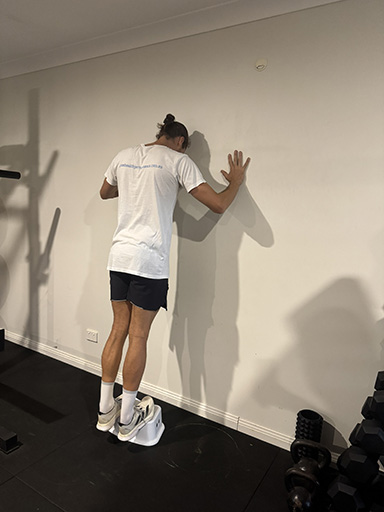
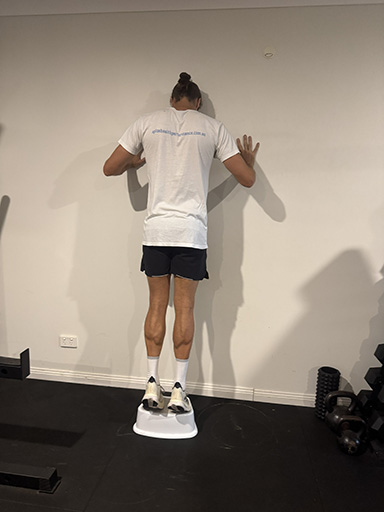
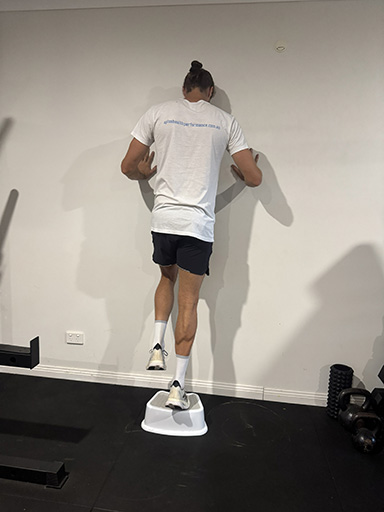
- Stand with heels off a step, press through balls of feet lifting heels up.
- Pause at top, control the descent slowly.
- On single leg, push through big toe and avoid rolling ankle outward.
5. Push-Up (Knees) → Push-Up (Toes)
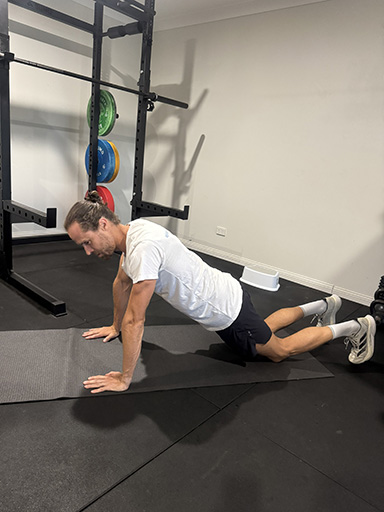
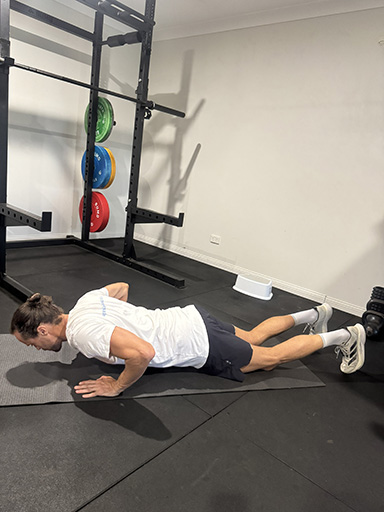
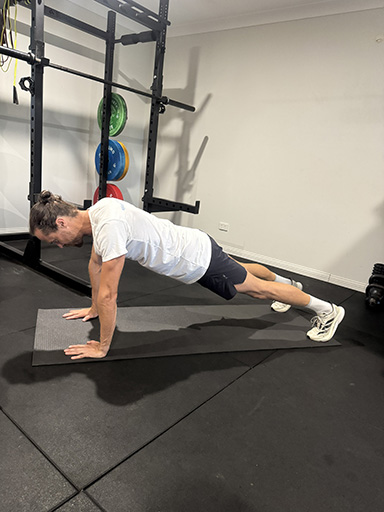
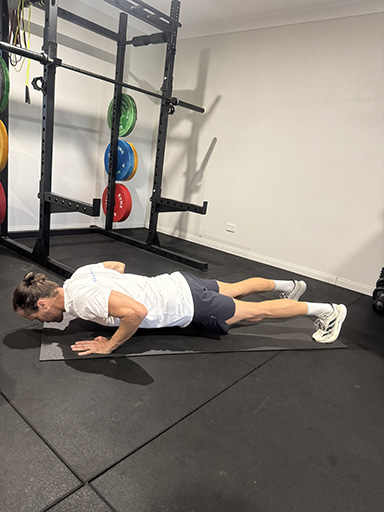
- Hands under shoulders keeping body in straight line.
- Lower chest to floor with elbows at ~45° to the side.
- Keep core braced and body straight without sagging hips.
6. Alternating superman -> Bird Dog
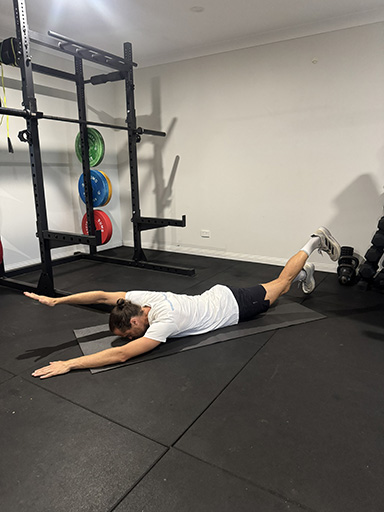
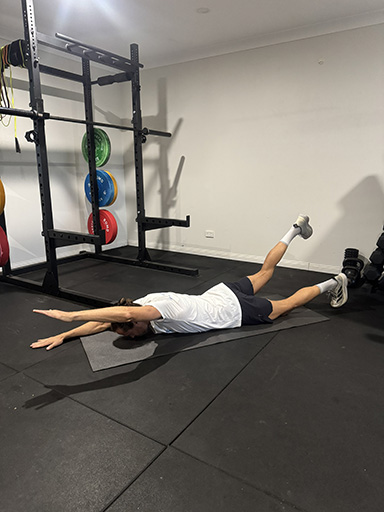
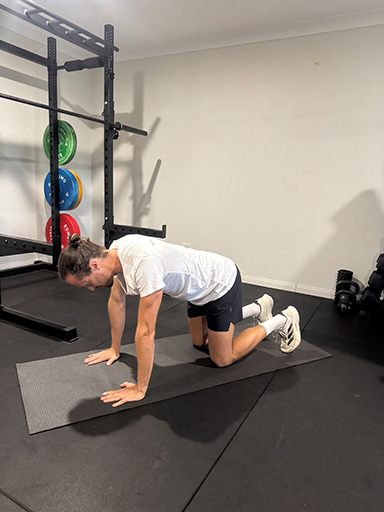
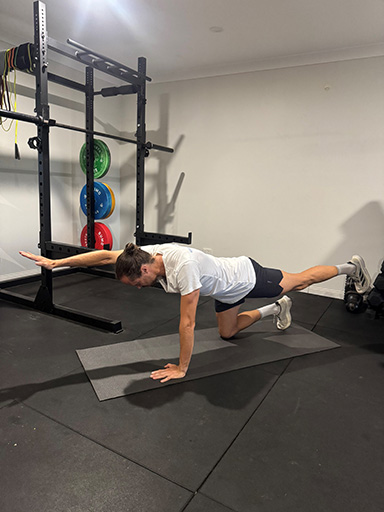
- Lie flat with arms and legs extended, raise opposite arm and leg engaging glutes and shoulder blades.
- From hands and knees, extend opposite arm and leg, keep hips square.
- Engage core to prevent rotation or arching your back.
7. Side Plank (Knees) → Side Plank (Feet)
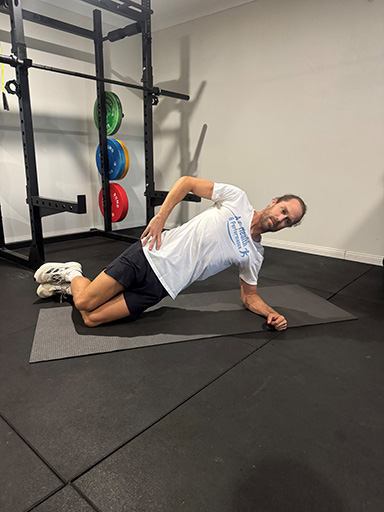
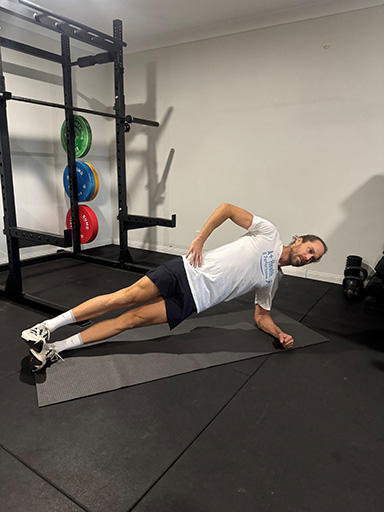
- Elbow under shoulder, knees and feet together.
- Lift hips so body forms a straight line and hold.
- From feet, extend legs straight with feet together, keep hips up and stable.
Download Beginner Exercises
PDF Format
Website: aplushealthperformance.com.au
Contact: aaron@aplushealthperformance.