Ever wondered how open water and pool swimming differs when training for a triathlon?
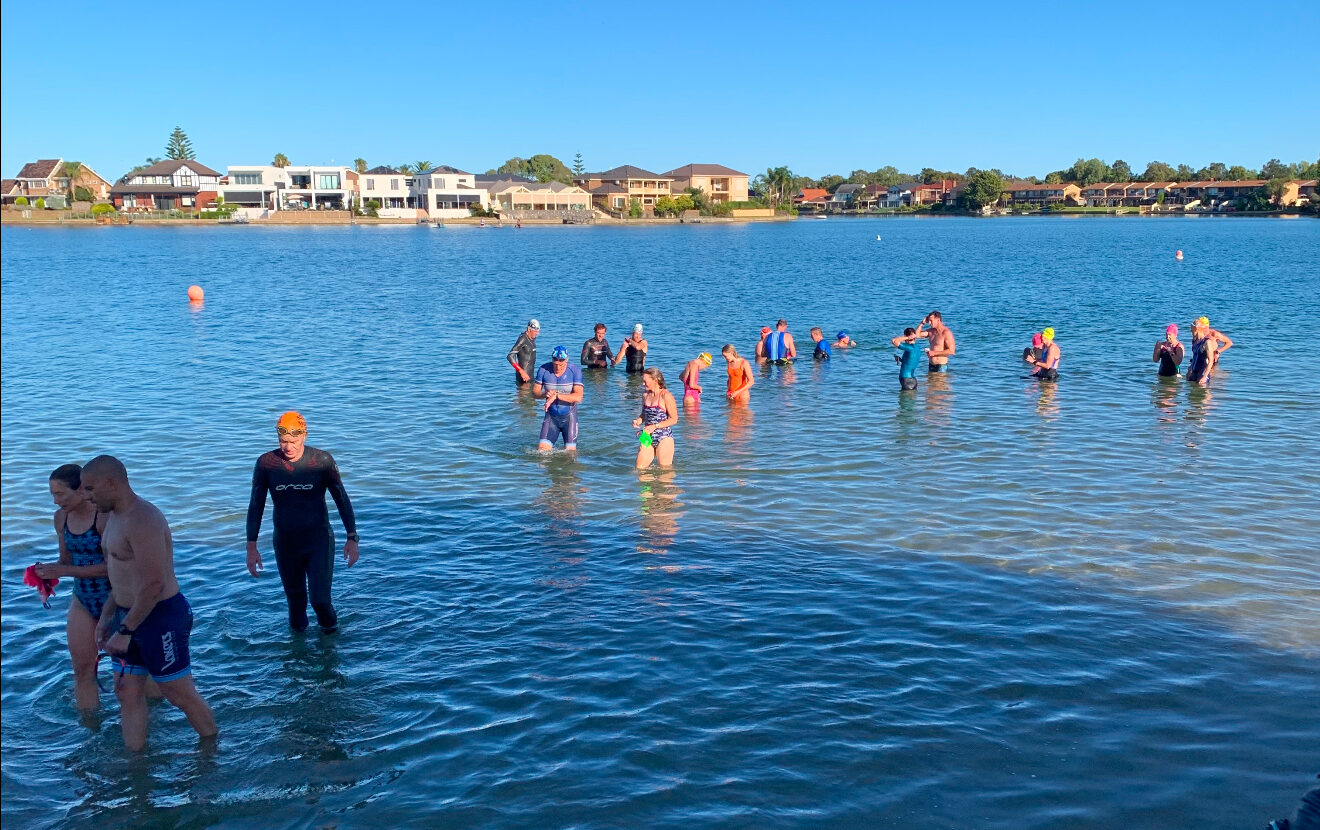
Nigel Pietsch from the Lakers Triathlon Club gave us unprecedented access into some of his key coaching techniques when it comes to open water swimming ahead of the West Lakes Triathlon on December 14 run by Pushing Limits Event and our Sprint and Aquathlon Championship races over the Australia Day long weekend.
“Pool swimming is great for technique and fitness, but it is the open water that gets you ready to race,” he said.
A key difference between pool and open water swimming is the environmental factors. While pool swimming is great for fitness, it doesn’t mimic the water temperature, choppiness, debris and navigation that is associated with open water swimming. All of which are key when training for a triathlon or aquathlon.
“Firstly, there is the water temperature. While Leif Eriksen has already braved no wetsuit swimming this season, the water is a little chilly after a cold November, so you firstly need to adjust to the water temperature.
“Then there is the chop. While the lake is usually sheltered, occasionally when the wind blows it can stir things up making swimming more challenging.”
But it’s not just water temperature and choppiness that impacts the swim, factors such as navigation and swimming with groups of people that also must be considered when preparing for open water swims.
“Navigation is always tricky with no black line to follow and often this is compounded by having the sun in our eyes. The open water is where you fast track your sighting skills and patterns.
“In the pool you can count laps, but in the open water it is harder to judge distance and consequently paces. Go out too hard and you soon start to fade.
‘Then there are the buoys you have to navigate your way around while trying to stay on the feet while getting swamped by everyone around you.
But after some practice and continued exposure you start to create your own techniques that help you push further and give you both a physical edge and mental edge in competition.
Nigel also provided insight into the difference between the way drafting works in the pool compared to the open water and the impact that can have while competing in triathlons or aquathlons.
“Drafting in the pool is very straight forward, but in a wide expanse of water it becomes an entirely different story, something you have to practice.
“Then there is having to swim amongst others. Pool swimming is very constant; while racing in open water will see your pace surge and recover many times, as you adapt to those around you.”
Throw in the added competitive element of wanting to win, beating your personal best or just vying for better spot, open water swimming can involve some unexpected argy-bargy such as ‘toe tapping, head dunking or just swimming straight over you’. All in the spirit of competition of course.
Environmental factors aside how does open water swimming enhance your technique or give you an upper hand over other triathletes?
“Most elite triathlete swimmers are holding 85-90strokes per minute for a full 1500-3800m swim, whereas a typical age grouper is down around the 55-60 range.
If you want to swim faster, then swimming in the open water is where you learn your craft. The swim stroke also changes from long and relaxed in the pool, to a higher recovery arm, quicker arm turnover in the open water.”
Open water swimming not only allows you to perfect your stroke but helps to break down that mental barrier when it comes to overcoming unexpected water conditions. Having the familiarity, experience and techniques to combat the elements can also make for a more enjoyable race day and calm the nerves.
Currently the Lakers are running two swimming sessions, one 7.30am Sunday mornings and 6pm Monday night from Tiranna Way West Lakes.
Lakers Triathlon Club is just one of many clubs in South Australia that are utilising West Lakes for open water training, so if you’re looking for something over the summer period then reach out or sign up to the upcoming triathlon events.