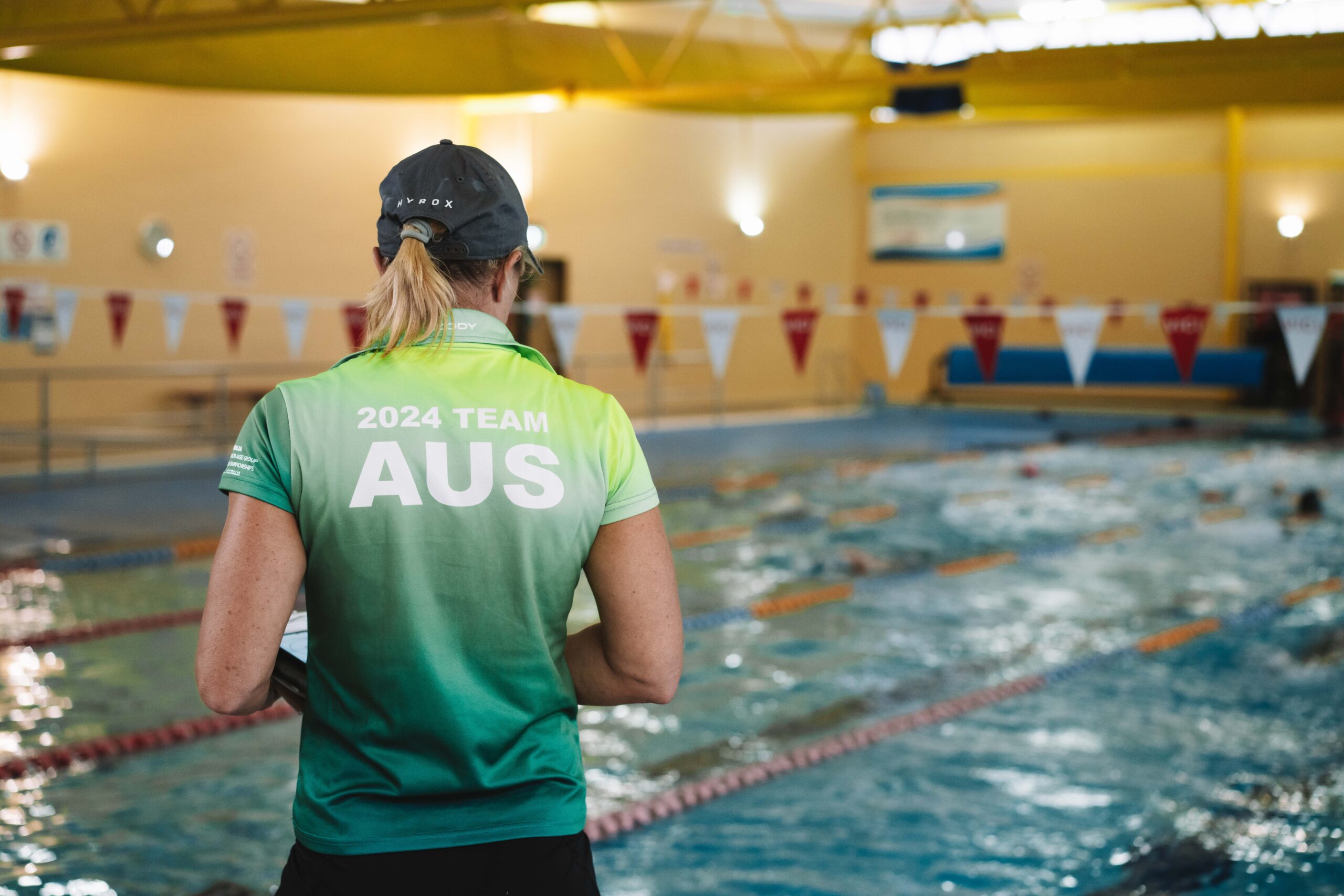
Each year, International Women’s Day (IWD) provides an opportunity for us to celebrate the women in our sport. In 2026, the theme “Balance the Scales” calls for meaningful action to ensure women have equal opportunities to participate, lead and succeed and to share stories of resilience.
At AusTraithlon we asked some of our staff and athletes about the significance of the day and the initiatives in place to ensure more women and girls can reap the benefits of triathlon.
Across the triathlon community, we’re continuing to build a more inclusive and equitable environment. One where women can thrive at every level of the sport, from grassroots participation through to elite competition with Jones echoing the sentiment of belonging.
“You don’t need permission to take up space in this sport your start line, your ambition, and your voice belong here,” said Olympic Silver medallist and ITU and IRONMAN World Champ Michellie Jones.
Triathlon itself is a sport built on balance: the combination of swim, bike and run requires dedication, resilience and adaptability. But beyond the course, balancing the scales also means ensuring women have equal access to opportunities, visibility and support within the sport.
“We are lucky in that men and women in our sport all compete on the same course, whether it’s an age grouper participating in their first sprint distance triathlon or a professional taking on Kona, same course, same distance, same conditions,” said Head of Communications and Marketing, Bec Burns.
Encouraging more women to participate in triathlon begins with creating welcoming and accessible pathways to help more women take their first steps onto the start line.
AusTriathlon’s National Integrity Manager, Louise Taylor, highlighted how continuing to “provide safe and supportive environments, with leaders who promote and educate others on gender equality” will help to foster inclusive environments and provide development opportunities, to ensure the sport continues to grow stronger and more diverse.
For many women, triathlon offers more than competition. It provides a community where athletes support one another, celebrate achievements and challenge themselves in new ways.
The Power of Role Models
Representation plays a vital role in encouraging the next generation of athletes. Seeing is believing and showcasing women succeed at the highest levels of the sport can inspire young athletes to believe that they belong in triathlon.
“Never doubt your capability. And surround yourself with men and women who will never allow you to,” National Integrity Manager, Louise Taylor stated.
In fact, for AusTriathlon’s Head of Paralympic Program, Megan Hall her inspiration comes from the past, present and future para triathlon team.
“They are not only athletes competing in one of the toughest sports, but wonderful humans navigating training alongside work, study, and life. As athletes with impairments, they continue to break barriers and pave the way for the next generation. Their resilience, courage, and hard work is truly inspiring.”
As a whole, the High-Performance team with Megan Hall, Maxine Seear Manager of the Ascent Academy, Annette Eastwood Head of Performance Pathways and Non Stanford-Royle Ascent Academy coach is actively helping pave the way for future generations, demonstrating what is possible through determination, dedication and passion for the sport.
Strengthening the Community
Balancing the scales also means recognising the contributions of women beyond the racecourse. Coaches, officials, volunteers and administrators all play vital roles in shaping the future of the sport.
By supporting women in leadership and decision-making roles, the triathlon community can ensure a wider range of voices and experiences help guide the sport forward.
“Strength, leadership, and resilience in women aren’t exceptions they’re standards,” Olympic Silver medallist and ITU and IRONMAN World Champ Michellie Jones.
These efforts contribute to a stronger and more inclusive sporting environment one where athletes, staff and volunteers alike feel supported and empowered.
By continuing to champion equality and inclusion, AusTriathlon and the broader triathlon community are helping build a future where everyone has the opportunity to reach their full potential, both on and off the course.